Monday, September 26, 2022

(Mock Trial) Case 1: State v. Mann

Case 1: State v. Mann

Arguing on the Side of North Carolina (State)


Throughout history, property law has been in effect in many different countries. The United States of America is no different. In the case of North Carolina vs Mann, it is a case based primarily around property. As slaves have been considered property, why would property law not affect the ownership of slaves?

In this case, Mann had hired the slave, Lydia, but she was not owned by him. She was his temporary property; therefore, she was not his to injure or damage.

Although Mann had been renting Lydia, that does not mean that she is his property. As there aren't any rental property laws as of right now in the year 1829, we can only use the word "rent" as a guide to how he should have behaved.

When renting something, you pay the owner the required payment so you can use the property. So, "renting" means you allow the possession of property in exchange for payment. While renting, damages done to the property is not permitted.

John Mann broke this agreement. He damaged property that is not completely owned by him. So, he should face the repercussion of his mistake.

Historically, property law has been in place since the founding fathers founded the United States. Thomas Jefferson and James Madison even wrote about how common law affects property claims. Laws such as these have been established since to protect order. Without them, people would be taking and abducting others' possessions. Or worse, like John Mann destroy others property.

Mann could also have presented a bailment. It would be no different as if he were renting but it's still important to list the background. A bailment is described as a temporary transfer of possession. An example of this is when you check out a library book and the library loans it to you for a specific amount of time before you have to return it. Mann may've been involved in a bailment, but in the end, he would have to return his temporary property back to the original owner.

Even so, US Supreme Court Justice, James Wilson argued in 1790 that "Every crime includes an injury: every injury includes a violation of a right." This statement could be argued against Mann under the basis of property law. If one were to say that John Mann's actions were a crime (which they were), his actions would need to include an injury (which they do). John Mann injured his temporary property; therefore, he committed a crime against property law. Furthermore, Justice James Wilson argued this on the philosophical grounds of American Property law, so this statement does not exclude Lydia.

Within Americas past, property law and the rights involved had been argued. Though never before in the US court system has there been a landmark case based around slave law such as this one arguing on behalf of the slaves' rights. John Mann had broken multiple laws, one of those being property laws. So, he should pay his fine without argument.


Sources:

The Law of Premises Liability in America: Its Past, Present, and Some Considerations for Its Future

Property Law (Wikipedia)

Of the Natural Rights of Individuals - James Wilson

Law of Possession (Wikipedia)

State V. Mann

Rent Definition

Rent in the US

Monday, September 19, 2022

The Frederick Douglass Game (Opposing Side)

 The Frederick Douglass Game

Views from the Opposing Side; Arguing on the Side of Anti-Slavery


In my Talking About Freedom class, we played a game called "The Frederick Douglass Game." We were either put on the Anti-Slavery side or the Pro-Slavery side. Below are some arguments spoken on the Anti-Slavery/Abolitionist side:

Frederick Douglass

Frederick Douglass was an abolitionist. He believed that slaves should be free, though he thought that the black males should be freed first. He was a runaway slave and eventually helped Abraham Lincoln write the Emancipation Proclamation which abolished a lot of slavery that was being done in the South.

Harriet Beecher Stowe

Harriet Beecher Stowe had a lot of empathy towards black mothers. She felt saddened with how children were separated from their mothers because of slavery. She eventually wrote Uncle Tom's Cabin, affecting a lot of people and starting an uproar in the anti-slavery movement.

Harriet Tubman

Harriet Tubman was a slave. She was forced into slavery at the age of five when she was sold into it. She was separated from most of her family because of it. Eventually when she escaped, she came back to help save her family and many more slaves, creating the underground railroad. She never left anyone behind, helping as many slaves with escaping as possible.

Susan B. Anthony

Susan B. Anthony believed that slaves were no different than white people, or anyone else. She believed that they were created by God, so they were no different than anyone else. She collaborated with Frederick Douglass to abolish slavery.

John Brown

John Brown was an Evangelical Puritan who believed that slavery directly contradicted Gods words. Essentially the idea of "Treat others the way you would like to be treated." He wondered how followers of God believed that slavery was okay when they were supposedly followers of the bible.

Angelina Grimke

Angelina Grimke was an abolitionist. She had parents who owned slaves, so she saw their mistreatment secondhand. While her parents owned slaves, her sister decided to teach slaves. After years of witnessing the injustice done towards slaves, she decided that she wanted to end slavery all together. She eventually wrote the book, "Anti-Slavery Appeal to Christian Women." Her writing career didn't stop there. She wrote many more books about abolishing slavery.

Abigail Adams

Abigail Adams believed that basic freedoms that every human should have had been being taken from slaves. She believed that slavery was a sin and that followers of God should not support such a monstrosity. She often voiced her (at the time) controversial opinion to her husband John Adams in letters and other means of communication.

Abraham Lincoln

Abraham Lincoln was the 16th President of the United States. he believed that if slavery was not wrong, then nothing would be considered wrong. During his presidency, he established the Emancipation Proclamation with the help of Frederick Douglass. The Emancipation Proclamation provided a new solution to ending slavery because the constitution left the law of slavery up to the states, meaning the federal government couldn't make decisions around the issue. Abraham Lincoln had always been an abolitionist.

John Quincy Adams

John Quincy Adams was the 6th President of the United States. He was an abolitionist. His main belief was that the United States' Constitution should support the rights of all people. And the description of "all people" meant everyone including slaves.

Sojourner Truth

Sojourner Truth was a slave. She lost her children and family while she was in servitude. She wasn't sold or forced into slavery; she was born into it. Once when she was being sold, she was given up for $100 and a flock of sheep.

Thursday, September 15, 2022

The Frederick Douglass Game

The Frederick Douglass Game

Pro-Slavery Side (Samuel Morse)


Samuel F.B. Morse (circa 1850)

I am Samuel F.B. Morse. Established inventor and painter. I developed the electric telegraph and codeveloped morse code along with Alfred Vail. I was born and raised in the North, specifically Massachusetts.

What I am going to argue in front of today's court is that slavery is just.

Furthermore, "my creed on the subject of slavery is short. Slavery per se is not sin." I wrote more about this in my writing, "An Argument on the ethical position of slavery in the social system, and its relation to the politics of the day."

If God had decreed that slavery is defined as such, may he come down from the heavens and make his voice heard. Though he has not done so, meaning he does not believe the notion of slavery to be unjust.

What right do those who do not speak on behalf of our God have to speak against the side of those doing something that is not deemed a sin by him? What right do they have to deem slavery as unjust without the bible backing their side?

Political decisions of the matter should not even be a deciding factor as the bible is what this country had been founded upon less than a century ago.

My fellow Northerners of Massachusetts and beyond have truly lost their heads to believe the use of slavery is considered sinful as the bible has never explicitly said anything specifically against the practice.

We shall not fret over other states business, as we are not of the group who would have to do the labor if our slaves were taken from us. We should never speak on subjects that don't affect us. Until the founding of our country, the practice of slavery wasn't questioned.

Even our founding fathers owned slaves. Including the late President George Washington.

Those who disagree with the preestablished institution, just want to find something wrong with others. To get involved in something that is of no concern to them. This country is being divided because there are self-righteous people. They believe they are in the right for not supporting slavery. Though aren't we all followers of Christ, our holy spirit.

Since this fine country was established, some states have gotten involved in other's affairs. It is not worth the trouble, as the Southern half of our nation will continue with their God given right of owning their property: slaves. Getting involved in other's opinions will only cause arguments and fights. One shouldn't shove their nose in the endeavors of another. Especially if they aren't performing a sin.

So, I, Samuel Finley Breese Morse, end my address with the statement of the mere holding of slaves is no different in morality as compared to being a parent, an employer, or a ruler.


Sources:

An argument on the ethical position of slavery in the social system, and its relation to the politics of the day

Quote 1

Quote 2

Tuesday, September 13, 2022

Gone With the Wind (Review)

 Gone With the Wind


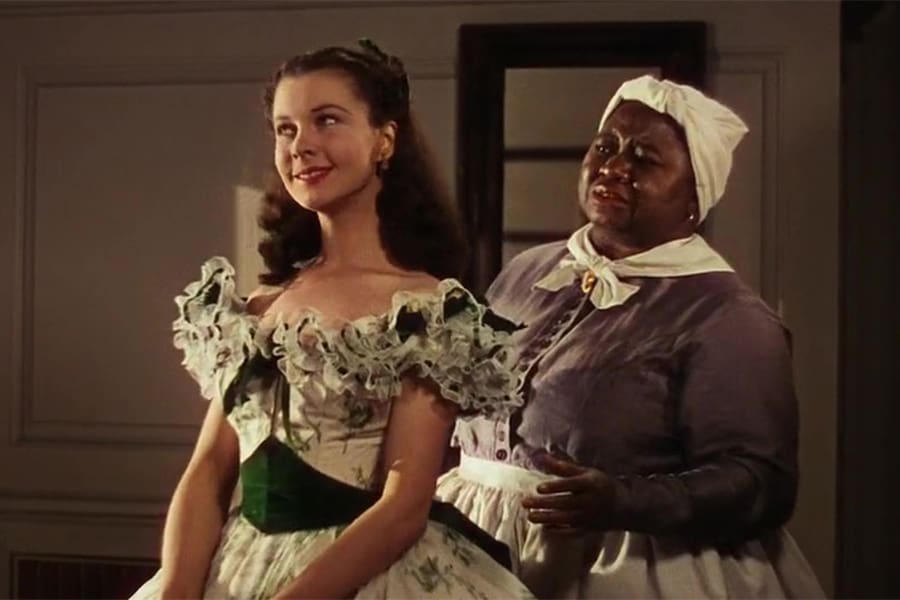
On Monday, September 12th, 2022, my Talking About Freedom class met up in High Point University's Extraordinaire Cinema. We all got settled into the seats and eventually started watching Gone with the Wind. The movie started, and we could already tell how the scene was set. There were men dressed in formal suits and women in puffy dresses. Automatically, this leads to the understanding that it's set in the 1800s.

In the 1800s slavery was still active, and a big thing in the South. How the characters spoke pushed the idea that the story was happening in the South. We also saw that there were slaves working in the opening scene. We then came to further understand that it was set before slavery was abolished in the first official scene. A black woman, who goes by the name Mammy, came into the frame. We could tell that she was dressed in servant clothes. Meaning, there was a high chance that she was enslaved. Even without audio clues to what events were happening, visually we could already gain a vague understanding of the setting.

Throughout the film, I noticed that white people were the primary focus. There weren't many times where the camera focused on the black cast, compared to how the white cast was focused on. The lead-most roles were also white people, so we already understood whose perspective the film was from.

As the film went on, the mistreatment of black people at the time wasn't stark compared to how it has been mentioned historically. The most we saw was the lead character, Scarlett, slapping Prissy when she didn't do something she was supposed to do. But even this was watered down by how Scarlett had slapped Ashley early in the film.

The way the black people were behaving seemed unfitting too. Since they were enslaved, you would have thought they would have taken their work more seriously and not have spoken back to their enslavers. This didn't seem to be the case. They seemed more comfortable talking to their enslavers than would be historically accurate. It didn't seem to fit that Prissy acted one way the whole time we knew her, and then got slapped for acting the same as she always had. This is one part of the film I didn't like; it made the black people seem like they weren't hurting or in a bad position. As if they were okay with how things were and weren't getting mistreated.

In fact, the terms "slave" or "slavery" wasn't even mentioned as much as one may think it would be. Especially considering how it was set in the mid 1800s, around the time of the civil war.

Some highlights of the film that I liked was the lighting. I was interested in how they used shadows to play out a scene. I also like how they used lighting with color. Specifically, when they were capturing the fire reflected off the characters' faces.

Overall, I believe that Gone with the Wind is an eye-catching movie that may even be considered ahead of its time in terms of directing, lighting, and camera angles.


Sources:

Gone with the Wind (1939)

Thursday, September 8, 2022

Bible Team Challenge!


Bible Team Challenge

by Shelby Caruso & Samantha Keever

Religion is a large part of many people’s lives. In almost every time in history, religion has had an effect over different events for different reasons. Slavery has not been an exception. If anything, religion has had an extremely large background in the history slavery.


Throughout time, Christianity has had many instances of slavery being a part of their daily lives. My argument is that Christianity has condoned slavery in its history. One of the more extreme examples is in the 1600s and 1700s, when the majority of slavery was happening in the Caribbean colonies. The Caribbean became the epicenter of slavery during that time, done by the English, French, Portuguese, Spanish, Danish, and Dutch. In Jamaica during the year 1688, Jamaica made a law that all slaves were to be made ready by their masters to follow Christianity. The end result would eventually be the church performing a baptism on slaves. So not only did Christianity affect the performance of slavery, but slaves were also required by law to convert to Christianity in some places. There weren’t many people at the time who would offend the public majority's opinion. Not until the 1800s would the idea of slavery being lawful be challenged by those who were brave enough.


Bible Excerpt from Leviticus 25: 44-46


Overtime the views of slavery in Christianity has changed drastically. There have been instances where Christians have believed slavery to be a sin and other times where majority of Christians believed slavery to be okay. For instance, in the 1600s until the 1800s, slavery was accepted by a lot of Christians. Throughout the 1800s to the 1900s, the number of Christians who thought it wasn’t bad dwindled. Eventually, after slavery was abolished in most places, Christians overall idea of slavery changed. The majority began thinking that it wasn’t acceptable.

-Shelby


Slavery was a big issue in our world throughout several decades, primarily the 1600s-1800s. A lot of people reinforce the idea that many religions including Christianity support slavery and actively partake in it. However, I do not agree with this proposition. I argue that Christians have condemned slavery. Most of these people look at the surface of the Bible’s message and see the words, “slaves and indentured servants” and assume the worst. They do not see the rules and regulations the Bible puts on the act of owning slaves. In several instances, the slave only has to work for seven years, and even got benefits from working, such as crops and livestock. After these years are up, the slave can be free. While there are examples in the Bible of the harsh kind of slavery we had in American history, it was not condoned Exodus 21:16. Christians even played this out through the abolishment of slavery. One example of this is the Grimké sisters. The famous Grimké family is known for their various abolitionist acts, a very famous one being Angelina Grimké’s letter, "An Appeal to Women in the South", that was published in “The Liberator.” This letter impacted many people within the church and the rest of society and is still a key part of history today. 

-Samantha

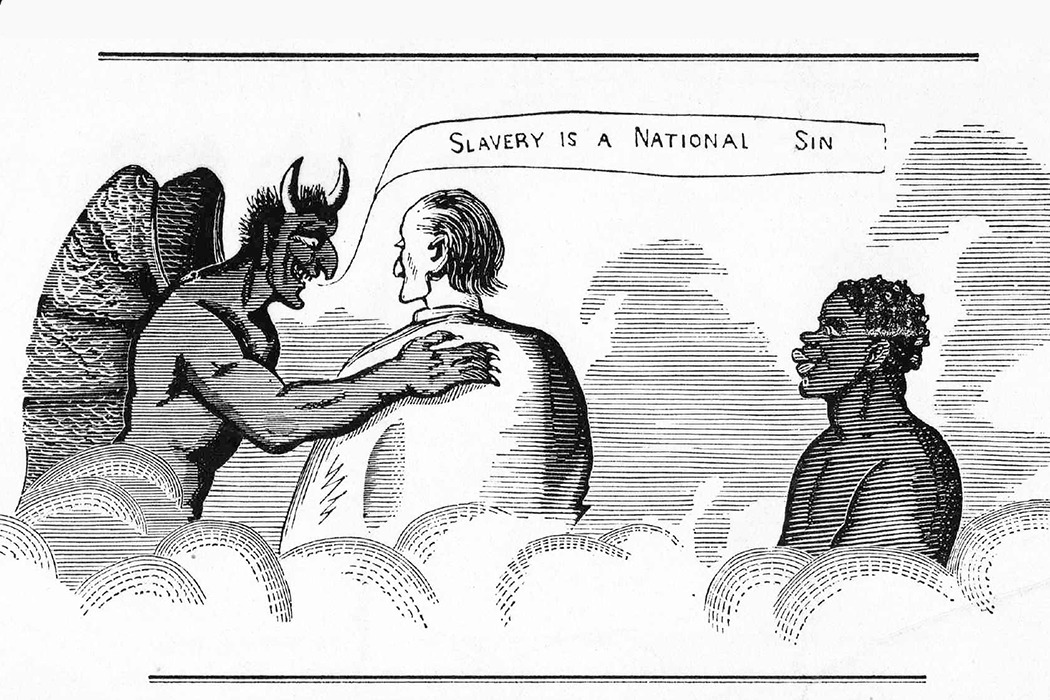
Political Cartoon Concerning Slavery and Christianity (Image Found Here)

Mostly everyone in today’s world can agree that slavery is harsh and unjust, and quite a lot of these people come from some sort of religious background. Before slavery was abolished, people manipulated the Bible and its context to fit whatever their belief was at the time; some still do to this day. As societies standards of slavery grew to where they are now, so did the Christian’s beliefs on it. I feel that the general public had a greater influence on them than their religious morals did. 


Sources:

Tuesday, September 6, 2022

(Opinion) Public Schools Should Talk in More Detail About Supreme Court Cases

Public Schools and Supreme Court Cases


Throughout my time in k-12, I enjoyed history class. I remember learning about history in parts, separated depending on what time it happened. Even as some things were repeated after learning it in a past year, it was great, I thoroughly enjoyed it. Though as I look back on my time there, they never really went into detail about Supreme Court Cases. I even believe that it has affected my comprehension of more recent court cases.

In the previous summer, I remember the day that the conclusion of Roe vs. Wade was decided upon. My sister told me what had happened and what it means. I had barely any knowledge of what was going on before that. All I knew was that it's a controversial case that was currently in the public-eye. I didn't understand the complete weight of the decision until after it was decided. I felt like I should have heard about the case in the past, especially since the original verdict of the case was made in the 1970s. I should have known more about what was going on, but I didn't. My education about the court was minimal. I could have done more research on court cases in my own time, but how would I know where to start considering that all I've learned about court cases in school extends to only the minimum.

In school, I have learned about what is involved in the court. I've learned the positions and roles of the court, such as the plaintiff and defendant, the judge, the witness, etc. But specific cases, I recall going in depth about only a single one. I remember going into some details about Brown vs. Board. (And that was in English class!)

Public schools should add impactful cases to their curriculum. Even if it is not done for history class, they should at least allow students to learn about the cases as an elective, no matter how controversial the classroom may become. Students should at least be given the opportunity to expand their knowledge upon the topics.

Round Table Discussion (Final)

 Round Table Discussion Image Found Here On December 12th, 2022, we had a round table discussion as our final exam. We had many different di...