Thursday, December 15, 2022

Round Table Discussion (Final)

 Round Table Discussion

On December 12th, 2022, we had a round table discussion as our final exam. We had many different discussions, all stemming towards the question of "What era are we in right now?" Although we didn't stay on topic for majority of the discussion, we still discussed interesting and controversial topics.

Currently in America, we are on a steady upwards curve when it comes to improvement of racial differences. Things are not the same as it was in the early 1900s, but changes still need to happen to improve the remaining issues.

During the discussion we started by talking about how there were people out there trying to stop the progression of change. The Supreme Court is taking on cases that are similar to previous cases, previous cases that were already decided. The reason they may be taking on these cases are because they want to make a change. Those changes could even possibly happen because there have been multiple personnel changes.

We then discussed the improvements and setbacks that are being faced currently. Such as how businesses trying to impress an audience by commercializing diversity. Simultaneously as people are denying that there are issues, and the government argues against the solutions.

Social media was also a key point discussed during the conversation. It was talked about how social media had desensitized most conversation and has created more group thinking. A lot of the issues were treated more lightly and there may even be a lack of education on the topics. Social media had created a way for many people to communicate within one community due to an algorithm put into place. Whereas these types of conversations between people wouldn't have happened as much in the past age with only television.

Finishing off the discussion, we ended with talking about how certain things about ourselves and our identity affect how we live. We talked about a few more issues as well, incorporating our thoughts and feelings. Overall, the Round Table Discussion was fascinating and entertaining to watch and listen. 

Although there doesn't seem to be a current name for our current era at the moment, the discussion provided me with some insight. This era could potentially be called the "post-Trump Administration Era', the 'post-Covid Era', or the 'Social Media Era'. Multiple reasons being the aftereffects of each instance mentioned.

Guess Who's Coming to Dinner (Review)

 Guess Who's Coming to Dinner

On December 5th, 2022, we went to the Extraordinaire Cinema to watch the 1967 film, "Guess Who's Coming to Dinner." The film starred Sidney Poitier, a recurring actor in the movies we have watched, as John Prentice. The film focuses on an interracial couple telling their families of their union, which was a then controversial topic.

To further elaborate the then controversy, this film was released at the height of the Civil Rights Movement. The year it was released is especially notable, as it released the same year that the court case Loving v. Virginia was decided. A court case where it decided that anti-miscegenation laws were unconstitutional and violate the Constitution's 14th Amendment.

Within the movie we had witnessed Joey Drayton, played by Katharine Houghton, trying to convince her family that marrying John Prentice wasn't a bad idea. She understood the challenges that they both would experience down the way as there was still racism around the country, and even around the world. While she was overjoyed by her and John's engagement, John was still skeptical. He was hesitant to tell people, especially his own family, while Joey was more excited to show and tell everyone. They both understood the problems and challenges they would face, though handled it differently.

I feel as if this movie was highlighting how there were more challenges for interracial couples to get married than same-race couples. It showcased multiple obstacles and how the characters would react in those circumstances. The characters would have to think of much more than just the problem of when to get married.

Personally, I think this was my second favorite movie we watched, after 'In the Heat of the Night'. I liked 'In the Heat of the Night' because it was a mystery and I liked following it. But 'Guess Who's Coming to Dinner' was good because it was just nice watching the positive outcome unfold.

Sources:

Guess Who's Coming to Dinner (1967) - Full Cast & Crew - IMDb

Monday, December 5, 2022

Hazel Scott Video Review

 "Whatever Happened to Hazel Scott?" Video Review

Hazel Scott was born in the West Indies, specifically the island of Trinidad in 1920. Her father had been a scholar and an intellectual, where as her mother had been a classical pianist. So, Hazel Scott had an early start to her music career. When she was 3 years old, Hazel Scott had already been known around her neighborhood as a piano prodigy.

Around the time that Hazel Scott was 4 years old, her mother and herself had moved from their home in Trinidad to Harlem, New York. Moving to the United States had been just the beginning of the start of her life. To elaborate, when Hazel Scott at turned 8 years old her mother had taken her to Julliard, an arts school. The minimum age to enroll in Julliard was 16, though once one of the professors heard her playing, he arranged to have her admitted as a private student of his.

When she was a teenager, Hazel Scott wanted to play jazz. Similar to how her mother had switched her genre to jazz during the Great Depression. Though, her mother had hoped that Hazel would continue on the path to becoming a classical musician, and Hazel had other plans. While Hazel Scott had still been in high school, she auditioned at the popular Roseland Ballroom and performed jazz there.

Not long after starting her jazz career, Hazel Scott had begun hosting her own radio show on W.O.R. New York. She had played complicated classical pieces in order to show off her talent. Not long after, she then got a job at Manhattans Yacht Club where she had started as an intermission pianist. This is also where she invented her own type of sound. Called the Hazel Scott Sound, it was where she took classical music by popular composers and would swing it. In order to "Jazz Up the Classics", as it was called, she would make the pieces faster, added complicated rhythms, and improvised.

At the age of 19, Hazel Scott became a performer at the popular desegregated New York hang-out, Cafe Society. Big names in jazz and other music had performed at the cafe. One of those names being Billy Holiday, who requested Hazel Scott become her replacement once she left.

In 1940, Hazel Scott recorded her first solo album titled "Swinging the Classics." Her album was a hit and raised her popularity significantly. Although she became more popular, she never went astray from her political values. In her contract, she even wrote that she would not play in front of a segregated audience, and she didn't care if that would limit the venues she performed in. Even if she had already arrived, if she had seen that the audience was segregated, she walked out.

Broadway had become the next step in her flourishing career when at the age of 22, she had landed a role in a Broadway musical. Brooks Atkinson, a New York Times theatre critic, had even wrote that "Hazel Scott has the most incandescent personality of anyone in the show." This jumpstarted her career as not long after she had been asked to come to Hollywood as an actress.

In Hollywood at the time, black people were not given the most uplifting roles. Black men were often given roles of servants, villains, or overall incompetent people. While black women had only been given the roles of maids or hookers. Hazel Scott refused to be assigned one of these demeaning roles as she had always wanted to uphold an image of dignity and pride. In her contract she had even written that she would not play a maid, mammy, or prostitute and would only play as herself. Thus, leading to her turning down on four different occasions to play a singing maid. She had even determined that she would have the final say in what music she performed and what clothes she wore.

Hazel Scott in the final scene of "The Heat's On"

Her career had been going well as she was on her way to becoming one of the most known and highest paid black entertainers in the country at the time. Though as her success was increasing, she eventually hit a bump in the road. On the set of one of the movies she had been a part of, she had an argument with the director. In the final scene she was supposed to lead a group of black soldiers and their girlfriends in song and dance, sending them off to war. Everything was fine until Hazel discovered that the director and costume designer planned to have the black women wear grimy aprons during the scene. This didn't sit right with Hazel Scott as she had said that no black woman would wear a dirty apron while seeing the men off to war. Things were at a stand-off between the director and Hazel as she had gone on strike for three days until things were changed. Three days later, the director had given up and changed the women's outfits to floral printed dresses. Although Hazel Scott got her way in the end, she had ended up being banned by the director of Columbia Pictures from ever stepping foot on another movie set, as she had caused the company to lose income.

After she had been banned from acting in any Columbia Pictures film, she returned to New York. There, she fell in love with Adam Clayton Powell Jr. Adam Clayton Powell Jr. was a Baptist minister, a civil rights activist, the first black New York City councilman, and an elected US congressman. He was 12 years older than Hazel Scott and had already been married when they met, so, they began a secret affair. When he inevitably divorced his wife, he got married to Hazel only four days after. Not long after, the press got attached to their story and they became the most famous black couple in America.

Dumont Television Network had been the next company to seek out Hazel Scott. Even though they were the fourth and smallest network in the growing television industry, she still took their offer of having her own show. Thereafter, she became a part of and led the first television show to be hosted by a black woman. The Hazel Scott show had premiered on April 14th, 1950. It also received a high viewership. There is no existing footage of the show today, though it is known to have been a standard 15 minutes.

There had been another block in the road not long after. Red channels were anti-communist documents that listed names of celebrities and influential people that were thought to be communist, and Hazel Scotts name had been sitting within them. She testified within the court that she was neither a communist nor a communist sympathizer. She could have ended her testimony there, but she didn't. She continued by questioning the morality of blacklisting. Not long after, she was blacklisted herself as her show was cancelled and put off air. Continuing from there, there weren't as many people who had wanted to see her in concert as her concert bookings had begun to plummet.

As her career was falling apart, her marriage began to crumble as well. So, Hazel Scott made the decision to divorce Adam Clayton Powell Jr. and move overseas to Paris with her son. While she was in Europe, her popularity there even began to rise.

She spent many years in Europe, though eventually decided to come back to the United States in 1967. When she came back, she had been expecting jazz to still be somewhat popular. Though it came as a surprise that the uprising genre of rock 'n roll was starting to eclipse jazz. Hazel Scott had slowly disappeared from the scene all together and moved with her son and his family in New York. In 1981, Hazel Scott died at the age of 61 due to cancer.

Source:

What Ever Happened to Hazel Scott? - YouTube

Saturday, December 3, 2022

The Other Group's Presentation (Mock Trial: Regents of the University of California v. Bakke)

 Mock Trial: Regents of the University of California v. Bakke

Allan Bakke had tried to enroll in the University of California's medical school, but he was denied acceptance because of a "racial quota." If not for that racial quote, Bakke believed that he would've been accepted. So, this became a case that was backed by the 14th Amendment.

Arguments Against Bakke

The University of California was expected to uphold a racial quota for acceptance into its institution. The racial quota was put into place for a moral reason, that is, it was a program that had been established in order to help uplift a traditionally oppressed minority. It had been done by protecting and using affirmative action. Affirmative action being described as positive reasons to discriminate and categorize groups. It was also discussed that in the lives of black people, the atmosphere of where they went to school is different. For this reason, the black students may have different or even less opportunities than white students, so in order to fill this gap, acceptance for specific numbers of the minority should be considered. The program was put into place to help those who would otherwise be oppressed, not used to harm Bakke.

Arguments For Bakke

Bakke had scored very high on his tests to get into the University of California medical school. High enough where he should've been accepted. He had everything he needed to get in, but he didn't get allowed in because of a racial quota that needed to be filled. It should be determined by survival of the fittest. Whoever has the best and leading grades should get accepted. Economically, it was not a good decision on the universities part because holding Bakke back, who is a smart and young individual, means he does not become successful, therefore harming the economy due to his lack of participation in it. Also, the point of Brown v. Board of Education was to show how in Plessy v. Ferguson it presented how putting people in categories was not how things should go. How that was an incorrect decision. How siding with the University of California was just like siding with Ferguson in the Plessy v. Ferguson decision. Going against Brown in the Brown v. Board decision as well.

Decision

On June 28th, 1978, the court had determined that the Universities use of racial quotas was unconstitutional, but they declared that the use of affirmative action was constitutional.

EOTO: The Watts Riots

 The Watts Riots

During the Civil Rights Era, there were a lot of public demonstrations that were positive or negative. These events fueled the Civil Rights Movements and how black people were treated in American society. The Watts Riots, which took place in 1965, were one of the negative events.

On August 11th, 1965, a 21-year-old black man named Marquette Frye and his stepbrother Ronald Frye had been pulled over by police in the Watts neighborhood in Los Angeles, California. They were driving their mother's car when they were pulled over by police for suspicion of intoxication.

When Marquette had taken the sobriety test, he had failed, leading to his attempted arrest. He had not wanted to be arrested, so he resisted with the help of his stepbrother Ronald. The scene had begun to gather a crowd of onlookers, leading to more involvement, especially since the police had harmed the brothers with violence. The brothers' mother had even showed up to prevent the arrest of her sons. Leading to more police force and even more witnesses watching the scene. Both sides had started to get involved, causing more violence, and allowing the news of the scene to spread.

After the catalyst of the Frye's eventful arrest, the riots had begun in the Watts neighborhood as well as its surrounding areas. The riots lasted between August 11th and August 16th in 1965 (6 days). Things had gotten so out of hand that in order to suppress the unrest 14,000 members of the California Army National Guard had to be brought in.

There had been an estimated 34,000 people who had participated in the riots. with the results of 34 deaths, 1,032 injuries, and 4,000 arrests. The destruction of around 1,000 buildings and over $40 million in property damage had also taken place.

The Watts Riots had been the city of Los Angeles' worst disturbance until the Rodeny King riots in 1992.

Sources:

Watts riots - Wikipedia

Watts Rebellion - HISTORY

Klansville U.S.A. Documentary

 Klansville U.S.A.

In class, we had watched the PBS documentary "Klansville U.S.A." on the Monday before Thanksgiving Break had begun. The documentary was about how the third wave of the Ku Klux Klan had spread from North Carolina to the rest of the south, and eventually, the entire country.

The History of the Ku Klux Klan

The word "Kuklos" is the Greek word for circle. This word is where the title for the Ku Klux Klan had originated.

The KKK had started around the time of the Civil War. It was a sort of social club organized by a group of white, confederate soldiers. They had initially started out by participating in pranks on black slaves. Eventually, those pranks turned into real, violent actions that resulted in lynching and the murdering of black people.

After the Klan had almost completely disappeared in the 1800s, they hadn't risen again until the 1920s. And eventually, they would rise again for the final time during the civil rights era.

Bob Jones

The film's strong point was how it talked about the third Klan's leader, Bob Jones. A white supremacist who was a significant part of the revised third Klan. From North Carolina, and born on July 26th, 1929, he was a high school dropout who left school in 10th (or maybe even 11th) grade. Not long after dropping out, he joined the United States navy. Not long after joining, he was discharged for not saluting a black soldier. Leading to him becoming a lightning rod salesman.

Eventually, Bob Jones had grown his reestablished Klan from a group of friends to over 10,000 members. Which was a big reason why he was rewarded the position of Grand Dragon. He had even tried to solidify his position as Grand Dragon by saying that his father was a KKK leader in the 1920s during the Klans second wave. Continuing that statement, he added that his mother had marched in the events that the Klan had had, while being pregnant with him.


Bob Jones had also brought in 2,000 people during his first Klan rally. The majority of the attendees primary concern was thinking that black people would take away their rights. This was the hook that Bob Jones and other Klan leaders took to establish their system of hate. They convinced the members that the Klan would prevent this from happening as an opposing group of the NAACP and other Civil Rights groups.

Bob Jones had spoken as the leader of the Klan for years. Convincing the group that violence was not the answer during Klan events and activities. Doing this helped him perfect a balancing act as the leader for those years. By doing so, he was able to keep up Klan activities as the government had threatened the group with the possibility of their rights and ability to protest being taken away. Eventually, it was discovered that Bob Jones had been embezzling money from the Klans donations. Leading up to his eventual sentencing of one year in federal prison in 1969. The primary reason for this sentence was his failure to produce Klan documents.

The Activities of the KKK

Often during Klan rallies, there was a symbolic burning of a huge cross at the end. It was a cross that was draped in Burlap and drenched in gasoline to be set on fire. This was done as a fill-in for violence. Instead of violence, members turned to this symbolic representation, as majority of the Klans members were religious.

When members of the KKK had found out about the misdeeds their Grand Dragon Bob Jones had done, they relinquished their memberships by ceremoniously setting a similar cross ablaze with their Klan membership attached.

Source:

"American Experience" Klansville U.S.A. (TV Episode 2015) - IMDb

Monday, November 14, 2022

Justice Harlan's Dissent in Plessy v. Ferguson

 Justice Harlan's Dissent

On May 18, 1896, the court case Plessy v. Ferguson was decided with a 7-1 leading on the side of John H. Ferguson. Though the case had a lead on Ferguson's side, the one judge who voted for Homer A. Plessy's side was Justice John Marshall Harlan. He had voted on the side of civil liberties, believing that "all citizens are equal before the law."

The case of Plessy v. Ferguson was a civil rights case on whether or not Homer A. Plessy, a man who is 1/8ths black, should be allowed to sit in the segregated white section of the train car. At the time, this was a controversial case, as it was an argument about the rights of black citizens. Making this a landmark case.

There was a single judge who voted in favor of the more controversial side. That judge being Justice John Harlan. His family had been slaveholders, so he was familiar with black slavery and civil rights arguments. He did have a half-brother who was mixed raced named Robert James Harlan. Some believe that his brother Robert may have been an influential factor in his final decision of the case.

Some of Justice Harlan's arguments included how the state could separate the races but only if the facilities used were equal. Another idea he brought forward was that the constitution was color-blind and that the United States had no official written class system. His arguments were heard but not considered. Leading to the side of Homer Plessy being lost to a 7-1 majority.

The case of Plessy v. Ferguson was not the only case that Justice John Harlan had a dissenting opinion on. He had also dissented in another civil liberties case called Giles v. Harris. A case that argued that black citizens should be able to register to vote. Justice Harlan had the dissenting opinion on the side of civil liberties here as well. The case eventually being overturned as the 14th Amendment didn't back the final decision.

So, to finish, Justice John Marshall Harlan was a person of the Civil Rights movement who was in a position of power, being a Supreme Court judge. His arguments supported civil rights and brought attention to the issues even when they did not get through to the courts closed mindset about segregation.

Sources:

John Marshall Harlan - Wikipedia

Plessy v. Ferguson - Wikipedia

Why Did Harlan Dissent In Plessy V Ferguson? - QuestionAnswer.io

Giles v. Harris - Wikipedia

Sunday, November 13, 2022

In the Heat of the Night (Review)

 In the Heat of the Night

On Wednesday, November 2nd, 2022, my Talking About Freedom class met up in the Extraordinaire Theatre to watch the movie "In the Heat of the Night." Released in 1967, it is a film that portrayed race relations in the south very well.

I thoroughly enjoyed this film. Out of the three that we had watched, this would happen to be my favorite. I love mysteries and following along to see who the culprit is. So, watching this movie was very fun and entertaining.

Not only was it entertaining, but it also accurately depicted racism in southern towns. At the start of the film, we witnessed racism directed toward the main character already. Sidney Poitier played the main character, Detective Virgil Tibbs. Virgil Tibbs is a homicide expert from the north. He was heading home on the late train when he was stopped by a local police officer for being a "suspicious person." He was brought into the station, which is when we found out that he himself is an officer from the north who had been in Mississippi to visit his mother. He then experienced multiple accounts of racism directed at him. Those instances throughout the film ranging from not being served at a restaurant to being attacked.

The movie showed how Virgil Tibbs struggled to prove himself to the members of the towns police force. He continuously had to make an effort the show that he could solve the crime. He even believed that if he didn't solve the mystery of the murder, he wouldn't be able to show everybody how good of a detective he was.

Eventually, towards the end of the film, he was able to earn the respect of the towns chief officer, Bill Gillespie (played by Rod Steiger), though only through trial and error while figuring out the case. We witnessed when the officers tried to take control of the case multiple times, thinking they had solved it, jumping in to take credit and lead of the case. Virgil Tibbs had tried to show how he was better in these types of situations. Taking back control and showing what actually needed to be done to the less experienced officers. In the end, both Gillespie and Tibbs realized that in order to solve the case, they would have to work together.

Overall, the film was attention-grabbing for me and didn't hold back on the depictions of racism in southern towns. It fits the description of being a drama and mystery, perfectly showcasing how Virgil Tibbs would've been treated at the time and still including the mystery as a key focus.

Source:

In the Heat of the Night (1967) - IMDb

Friday, November 11, 2022

The Other Groups Presentation (EOTO)

 EOTO: Civil Rights Era

On November 7th, 2022, my Talking About Freedom class held Mock Trials and EOTO presentations. I was a part of the Mock Trial group. So, this is a blogpost about the information that I learned from the EOTO groups presentation.

The KKK

The KKK was founded in 1865 and it expanded by 1870 in the South. The KKK was the Souths way of resisting the Republican Party's reconstruction era.

Lynching

Lynching is a form of violence where you cause harm without trial beforehand. It is a form of execution.

16th Street Baptist Church Bombing

On Sunday, September 15th, 1963, four young girls died by a bombing during church. The attack was done by the KKK. This was not the first time a bombing has happened in the city of Birmingham during this time. This had caused the city to be nicknamed "Bombingham."

3 Civil Rights Workers

On June 21st, 1964, three workers were tortured before being murdered by the KKK. The three workers had fought for civil rights.

The Lynching of Emmett Till

Emmett Till was a 14-year-old black child from Chicago. He had been visiting Mississippi and had gone into a candy store. There he was accused of flirting with a white woman. He was promptly lynched then murdered by the woman's husband and the husband's brother. At Emmett Till's funeral, Emmett's mother wanted an open casket so those watching could witness how terrible the hate crime was.

Edmund Pettus Bridge

This event was a civil rights march that had been a peaceful protest that turrned violent. It was televised, so those who were watching began realizing the issues.

The Assassination of Medgar Evers

Medgar Evers was a Civil Rights leader between the 1950s and 1960s. He had joined the NAACP in 1951 and was a broadcaster of the Civil Rights protests. On June 12th, 1963, he was assassinated by Byron de la Beckwith, who eventually went to prison for his crime in 1994.

The Civil Rights Act of 1964

Although the 13th, 14th, and 15th Amendments had been passed, states still had Jim Crow laws and required literary tests to keep the country segregated. So, JFK had eventually been convinced to create the Civil Rights Act to protect the rights of black Americans.

Rosa Parks

Rosa Parks had wanted to sit down on the bus instead of stand. She had been sitting in the "correct" segregated section of the bus and had been asked to stand so a white man could sit. She denied him before she was promptly arrested for not giving up her seat. She had said that she was tired. This has often been misinterpreted as her being tired from work, though in actuality, she meant that she was tired of how she had been treated because of Jim Crow/segregation laws.

The Creation and Rise of the NAACP

The NAACP was founded in New York City during February of 1909. It was created as a response to the 1908 Springfield riot in Illinois. By 1919, the NAACP had nearly 100,000 members. They were a crucial player in the Civil Rights Movement during the 1950s and 1960s.

The March on Washington

On August 28th, 1963, 200,000 people went to the US capital to protest segregation and the mistreatment of black people by the United States. Speakers took the podium to speak. One of those speakers being Martin Luther King Jr., who had his famous "I Have A Dream" speech. At the march, many security precautions were taken as people thought that the event would turn violent. Thus leading to President John F. Kennedy threatening to revoke the Civil Rights Act of 1964 if things had turned sour. Luckily, the march stayed peaceful and didn't have any rambunctious groups.

The Voting Rights Act of 1965

This act reinforced the 15th Amendment for black men to vote. The event that led up to it becoming a law was Bloody Sunday.

The United Negro College Fund (UNCF)

This organization provided financial support for black Americans and created better futures for them. The organization has worked with 37 historically black colleges.

Wednesday, November 9, 2022

(Mock Trial) Brown vs. Board of Education

Mock Trial: Brown vs. Board of Education


Writing from the perspective of the Board of Education (Economically)

The Brown vs. Board of Education case is seen as a debate over segregation in the aftermath of Plessy vs. Ferguson, based around whether or not black children should be allowed to study in black schools. Though it could also be seen as a debate around economics. Economically it is better to have separate schools as it increases production for school supplies and increases the number of schools built.

To elaborate, if every student went to a single school, then all of the money would go to a single place. Though if there were multiple schools, the money would be brought to different places, promoting the spread of money to different locations.

Having more than one school would also increase production in the materials used to make schools and materials in school. For instance, if a school had purchased a certain amount of furniture and supplies for their classrooms, having two schools would double that spending. Even more so for the school itself. If a certain number of materials were purchased so the school could be built, then having multiple schools would increase the supply and spending of those building materials.


Not only would having multiple schools increase the amount of money put out into the economy, but it would also increase jobs. On a smaller scale, it would give more work to those who would build the schools. They would have more jobs to take on so more workers could be hired. The wages of the other workers could also be raised, increasing the money put out for those in construction.

Having segregated schools would also provide more jobs for teachers and educators. Whereas when one teacher would be hired at one school, there would also be another hired at the second school. Not only that, but it would also provide jobs for black educators. They would be able to have jobs in education where they would not get that type of opportunity in white schools.

To finish, having separate and segregated schools would help the economy more than destroy it. It would increase employment and create more jobs. It would also increase production of goods and services. So, economically, there is no problem with splitting schools by race.


Sources:

Brown v. Board of Education - Wikipedia

Wednesday, October 26, 2022

Band of Angels (Review)

 Band of Angels


On Wednesday, September 28th, 2022, my Talking About Freedom class had another movie day. We had completed our mock trial and our EOTO presentation on that Monday before. And to celebrate a job well done, our professor brought us to the Extraordinaire Theatre to watch the movie "Band of Angels".

What I noticed about race relations in the movie was that black people were treated as property. It did a great job of depicting how black people were treated in the south. We were shown slaves being sold and how they were required to stand in different areas on boats away from white people. We also saw how Yvonne De Carlo's character, Amantha Starr, was treated. Even though she was still part white, she was still discriminated against for being partly black. We were also told Clark Gable's character, Hamish Bonds, past of being a slave trader. How he had worked with people who would seek out villages to take people in to be sold as slaves. It had helped me realize how things were in the south from the perspective of the characters. I had seen how people were treated based upon race.

New Orleans had been an international gateway into America. There were many different types of people who lived there. This means that many black people lived here, either willingly or unwillingly. Some as slaves and some as freed people. And the fact that European nations had already outlawed slavery by 1860, definitely affected the United States' feelings on whether slavery should continue.

In the film, the idea of "freedom" was brought up often. Each character had their own definition and reasons for wanting freedom. For example, Amantha Starr wanted freedom from half of herself. She didn't want to be labeled at all as black. Due to her being partly black, she was taken from her home and sold into slavery, she didn't want that. She wanted to live a "white life". Hamish Bond wanted freedom from his past. He had made mistakes that he wanted to repent for. Lastly, Sidney Poitier's character, Rau-Ru, wanted freedom from Hamish. Since his childhood, he had relied on him because he saved his life. He no longer wanted to protect him and feel as if he owed him something. In the end, all three characters never accomplished that freedom. Amantha learned that she didn't need to escape from part of herself, Hamish learned that his past was now a part of him and all he could do was move forward, and Rau-Ru helped Hamish in the end as he relearned that Hamish was like his family.

Compared to Gone with the Wind, I think I prefer this film. I like it because the movie focused a bit more on the perspective of black people during the time. This is good because the discussion of enslaved black people was the focus during the time. We got to see that perspective and learned more about the impacts. Band of Angels discussed the depiction of race in the south a bit better than Gone with the Wind did, as we saw not only the perspective of Rau-Ru, but the lead character Amantha was depicted as partly black. The black characters had more of a character and development in the end. They weren't just there as support for the white characters. Freedom for each character was also depicted. That was a good route to go on the filmmaker's part. By doing so in that perspective, we learned more about the characters and their feelings.

To finish, the film was great. The depiction of the time seemed more accurate than Gone with the Wind, which is a factor that I liked. And character building throughout the film was visible; you could definitely see each of their developments which was great.


Work Cited:

Band of Angels (Film: 1957)

Tuesday, October 25, 2022

The Other Groups Presentation (Mock Trial: Plessy v. Ferguson)

 Mock Trial: Plessy v. Ferguson


The case, which happened in 1896, was an argument around whether Homer Plessy should've been allowed to sit in the whites only section on a railcar. The case was focused on in Louisiana and followed a man named Homer Plessy who was 1/8 African American. Although he was 7/8 black, the argument of him sitting in the white are of a railcar was discussed.

Support of Plessy:

If the customer of the rail ticket is able to purchase the ticket, why does their race have an input in the matter. Even so, black people's lives intertwined with whites. In the end, segregation makes no sense as there were many black people who were still involved with white people's lives.

Support if Ferguson:

An argument against Plessy would probably be that he violated the law as he is shown to be 1/8 black. Also, from a religious standpoint, there is nothing that states how segregation is unjust or just. To add, the segregation between races had been beneficial to black people as they had started their own business and the economy had grown. It even showed how black people were able to thrive on their own (an example being Black Wallstreet).

EOTO: The Freedmen's Bureau

The Freedmen's Bureau

During the Reconstruction Era, the 13th, 14th, and 15th Amendments were developed. For the EOTO presentations, I was assigned the Freedmen's Bureau, also previously known as "the Bureau of Refugees, Freedmen, and Abandoned Lands." This group had been around during the Reconstruction Era, the time when the three amendments were created and added to the US Constitution.

Some background of the 13th, 14th, and 15th Amendments explain why this time period was so important. Not only were they influential amendments that helped freed black people, but they were also Amendments that were beneficial to white people as well. The 13th Amendment abolished slavery, which had been the start of the creation of the next two Amendments. The 14th Amendment was the citizenship Amendment and it provided three clauses/freedoms. Those being: The privileges or immunities clause, the due process clause, and the equal protection clause. Lastly, the 15th Amendment which had granted black men with the right to vote. These amendments positively affected the US Constitution and the nation as a whole.

Established on March 3rd, 1865, by Congress, the Freedmen's Bureau's purpose was to help former black slaves and poor whites in the southern portion of the country with the aftermath of the Civil War. It had provided people with food, housing, and medical aid. They had even established schools and provided legal assistance for anyone who needed it.

The bureau was originally intended to be a temporary agency that lasted throughout the time of the civil war plus one year after. Congress placed it under the direction of the war department as it assisted with events regarding the war. Also, the majority of original employees for the bureau were Civil War soldiers. The agency had been organized in districts covering 11 former rebel states. Some of those states included Maryland, Kentucky, West Virginia, Washington DC, etc.

Even though the bureau's intention was to help the south, they were struggling with keeping the group together, as they were struggling with funding and volunteers. The struggle was also due to the politics of race and reconstruction. The organization had failed to protect black people long-term.

Eventually in the summer of 1872, the Freedmen's Bureau was dismantled, primarily to pressure from white southerners.


Work Cited:

https://www.history.com/topics/black-history/freedmens-bureau

Friday, October 7, 2022

The Other Groups Presentation (EOTO)

 EOTO: De Jure Slavery Era

Abraham Lincoln (Image Found Here)

On September 26th, 2022, my Talking About Freedom class had presentations. Half of the class did a mock trial (of which I was a part of), and the other half did an EOTO. This blogpost will be about the information I learned from the other group from their EOTO.

Underground Railroad

The Underground Railroad was established around the early to mid 1800s. It was a network of routes and safehouses that assisted enslaved African Americans in escaping to the free states in the north. A key player in the Underground Railroad was Harriet Tubman, an escaped slave herself who conducted multiple trips after her own to help more enslaved people escape.

Uncle Tom's Cabin

Uncle Tom's Cabin was written by abolitionist, Harriet Beecher Stowe. Her story was said to have "helped lay the groundwork for the Civil War." The novel was written to help depict the realities of slavery in the south, as it follows a slave, Uncle Tom, and his view of other characters. Her idea was to show the impacts of slavery while still motioning towards the idea that Christian love could overcome slavery.

The Liberator

The Liberator was a weekly abolitionist newspaper that was printed and published in Boston, Massachusetts. It was created by William Lloyd Garrison who is an abolitionist himself. The idea of abolishing slavery mentioned in the paper was based more around religion than it being based around politics. It was a non-violent tactic used by Garrison to get his point across, eventually inspiring other abolitionists to take a stand.

The Nat Turner Rebellion

In August 1831, enslaved Virginians were led by fellow slave, Nat Turner, in a rebellion against their slave masters and other slave holders. By the end of the rebellion, 55-61 people (51 at least being white) were killed before the action was suppressed. And approximately 120 African Americans (both free and enslaved) were killed in the crossfire. Nat Turner went into hiding before being found and executed. Afterwards, 56 additional slaves were executed by the accusation that they were a part of the rebellion. This event led to the government creating laws that prevented black people from gaining further education and other civil liberties.

Missouri Compromise

The Missouri Compromise was a federal legislation that balanced free states and slave states. Its original premise was deciding whether or Missouri should be a free state or a slave state, eventually deciding on the later. As it decided that Missouri should not be free, in order to balance the country, it was decided that Maine should be a free state. This decision led to the divide between the north and south.

Amistad Mutiny

The Amistad Mutiny was a slave rebellion that took place on the slave ship "Amistad". 53 slaves, of whom were just abducted from Africa, revolted and killed the captain and cook of the ship. They left the navigator alive so he could bring them back to Africa. This plan backfired when the navigator instead led them northward. Eventually they were brought to Connecticut.

Fugitive Slave Act of 1850

This act was passed on September 18th, 1850. It required that all escaped slaves, following capture, be returned to their "owner". It was written that everyone must cooperate. This contributed to the growing tensions between the North and the South due to the topic of slavery. It was one of the biggest factors that led to the Civil War.

American Anti-Slavery Society

Founded in 1833 by abolitionists William Lloyd Garrison (creator of the Liberator) and Arthur Tappan. It had 1,350 local chapters and around 250,000 members by 1838. The A.A.S.S. was also a catalyst for the start of the women's suffrage movement.

The Kansas Nebraska Act

The Kansas Nebraska Act created the territories related to its namesake (Kansas and Nebraska). It encouraged the tensions around slavery, repealed the Missouri Compromise, and contributed to armed conflicts (one of those conflicts being "Bleeding Kansas"). The act was drafted by Democratic Senator, Stephen A. Douglas. The act itself caused a pro-slavery and anti-slavery argument that led to the downfall of the Whig Party.

John Brown

John Brown was an American Abolitionist and an Evangelical Christian. In his fight against slavery, he was not a pacifist, he much rather preferred action, therefore leading to violence. He was described positively as a martyr and a visionary. Negatively, he was described as a madman and a terrorist. Overall, he was known for being a radical abolitionist, performing in Bleeding Kansas and The Harpers Ferry Attack. He was eventually hung for treason against Virginia, the murder of five men, and inciting a slave insurrection.

Harpers Ferry Attack

Ran by Abolitionist John Brown (Previous Paragraph), it was an attack that lasted two days between October 16th-18th, 1859. The plan was to initiate a slave revolt in the South by taking control of the US arsenal at Harpers Ferry, Virginia. The group of 22 was defeated by the US Marines. 10 were killed, 7 were tried in court, and 5 had escaped.


Monday, September 26, 2022

(Mock Trial) Case 1: State v. Mann

Case 1: State v. Mann

Arguing on the Side of North Carolina (State)


Throughout history, property law has been in effect in many different countries. The United States of America is no different. In the case of North Carolina vs Mann, it is a case based primarily around property. As slaves have been considered property, why would property law not affect the ownership of slaves?

In this case, Mann had hired the slave, Lydia, but she was not owned by him. She was his temporary property; therefore, she was not his to injure or damage.

Although Mann had been renting Lydia, that does not mean that she is his property. As there aren't any rental property laws as of right now in the year 1829, we can only use the word "rent" as a guide to how he should have behaved.

When renting something, you pay the owner the required payment so you can use the property. So, "renting" means you allow the possession of property in exchange for payment. While renting, damages done to the property is not permitted.

John Mann broke this agreement. He damaged property that is not completely owned by him. So, he should face the repercussion of his mistake.

Historically, property law has been in place since the founding fathers founded the United States. Thomas Jefferson and James Madison even wrote about how common law affects property claims. Laws such as these have been established since to protect order. Without them, people would be taking and abducting others' possessions. Or worse, like John Mann destroy others property.

Mann could also have presented a bailment. It would be no different as if he were renting but it's still important to list the background. A bailment is described as a temporary transfer of possession. An example of this is when you check out a library book and the library loans it to you for a specific amount of time before you have to return it. Mann may've been involved in a bailment, but in the end, he would have to return his temporary property back to the original owner.

Even so, US Supreme Court Justice, James Wilson argued in 1790 that "Every crime includes an injury: every injury includes a violation of a right." This statement could be argued against Mann under the basis of property law. If one were to say that John Mann's actions were a crime (which they were), his actions would need to include an injury (which they do). John Mann injured his temporary property; therefore, he committed a crime against property law. Furthermore, Justice James Wilson argued this on the philosophical grounds of American Property law, so this statement does not exclude Lydia.

Within Americas past, property law and the rights involved had been argued. Though never before in the US court system has there been a landmark case based around slave law such as this one arguing on behalf of the slaves' rights. John Mann had broken multiple laws, one of those being property laws. So, he should pay his fine without argument.


Sources:

The Law of Premises Liability in America: Its Past, Present, and Some Considerations for Its Future

Property Law (Wikipedia)

Of the Natural Rights of Individuals - James Wilson

Law of Possession (Wikipedia)

State V. Mann

Rent Definition

Rent in the US

Monday, September 19, 2022

The Frederick Douglass Game (Opposing Side)

 The Frederick Douglass Game

Views from the Opposing Side; Arguing on the Side of Anti-Slavery


In my Talking About Freedom class, we played a game called "The Frederick Douglass Game." We were either put on the Anti-Slavery side or the Pro-Slavery side. Below are some arguments spoken on the Anti-Slavery/Abolitionist side:

Frederick Douglass

Frederick Douglass was an abolitionist. He believed that slaves should be free, though he thought that the black males should be freed first. He was a runaway slave and eventually helped Abraham Lincoln write the Emancipation Proclamation which abolished a lot of slavery that was being done in the South.

Harriet Beecher Stowe

Harriet Beecher Stowe had a lot of empathy towards black mothers. She felt saddened with how children were separated from their mothers because of slavery. She eventually wrote Uncle Tom's Cabin, affecting a lot of people and starting an uproar in the anti-slavery movement.

Harriet Tubman

Harriet Tubman was a slave. She was forced into slavery at the age of five when she was sold into it. She was separated from most of her family because of it. Eventually when she escaped, she came back to help save her family and many more slaves, creating the underground railroad. She never left anyone behind, helping as many slaves with escaping as possible.

Susan B. Anthony

Susan B. Anthony believed that slaves were no different than white people, or anyone else. She believed that they were created by God, so they were no different than anyone else. She collaborated with Frederick Douglass to abolish slavery.

John Brown

John Brown was an Evangelical Puritan who believed that slavery directly contradicted Gods words. Essentially the idea of "Treat others the way you would like to be treated." He wondered how followers of God believed that slavery was okay when they were supposedly followers of the bible.

Angelina Grimke

Angelina Grimke was an abolitionist. She had parents who owned slaves, so she saw their mistreatment secondhand. While her parents owned slaves, her sister decided to teach slaves. After years of witnessing the injustice done towards slaves, she decided that she wanted to end slavery all together. She eventually wrote the book, "Anti-Slavery Appeal to Christian Women." Her writing career didn't stop there. She wrote many more books about abolishing slavery.

Abigail Adams

Abigail Adams believed that basic freedoms that every human should have had been being taken from slaves. She believed that slavery was a sin and that followers of God should not support such a monstrosity. She often voiced her (at the time) controversial opinion to her husband John Adams in letters and other means of communication.

Abraham Lincoln

Abraham Lincoln was the 16th President of the United States. he believed that if slavery was not wrong, then nothing would be considered wrong. During his presidency, he established the Emancipation Proclamation with the help of Frederick Douglass. The Emancipation Proclamation provided a new solution to ending slavery because the constitution left the law of slavery up to the states, meaning the federal government couldn't make decisions around the issue. Abraham Lincoln had always been an abolitionist.

John Quincy Adams

John Quincy Adams was the 6th President of the United States. He was an abolitionist. His main belief was that the United States' Constitution should support the rights of all people. And the description of "all people" meant everyone including slaves.

Sojourner Truth

Sojourner Truth was a slave. She lost her children and family while she was in servitude. She wasn't sold or forced into slavery; she was born into it. Once when she was being sold, she was given up for $100 and a flock of sheep.

Thursday, September 15, 2022

The Frederick Douglass Game

The Frederick Douglass Game

Pro-Slavery Side (Samuel Morse)


Samuel F.B. Morse (circa 1850)

I am Samuel F.B. Morse. Established inventor and painter. I developed the electric telegraph and codeveloped morse code along with Alfred Vail. I was born and raised in the North, specifically Massachusetts.

What I am going to argue in front of today's court is that slavery is just.

Furthermore, "my creed on the subject of slavery is short. Slavery per se is not sin." I wrote more about this in my writing, "An Argument on the ethical position of slavery in the social system, and its relation to the politics of the day."

If God had decreed that slavery is defined as such, may he come down from the heavens and make his voice heard. Though he has not done so, meaning he does not believe the notion of slavery to be unjust.

What right do those who do not speak on behalf of our God have to speak against the side of those doing something that is not deemed a sin by him? What right do they have to deem slavery as unjust without the bible backing their side?

Political decisions of the matter should not even be a deciding factor as the bible is what this country had been founded upon less than a century ago.

My fellow Northerners of Massachusetts and beyond have truly lost their heads to believe the use of slavery is considered sinful as the bible has never explicitly said anything specifically against the practice.

We shall not fret over other states business, as we are not of the group who would have to do the labor if our slaves were taken from us. We should never speak on subjects that don't affect us. Until the founding of our country, the practice of slavery wasn't questioned.

Even our founding fathers owned slaves. Including the late President George Washington.

Those who disagree with the preestablished institution, just want to find something wrong with others. To get involved in something that is of no concern to them. This country is being divided because there are self-righteous people. They believe they are in the right for not supporting slavery. Though aren't we all followers of Christ, our holy spirit.

Since this fine country was established, some states have gotten involved in other's affairs. It is not worth the trouble, as the Southern half of our nation will continue with their God given right of owning their property: slaves. Getting involved in other's opinions will only cause arguments and fights. One shouldn't shove their nose in the endeavors of another. Especially if they aren't performing a sin.

So, I, Samuel Finley Breese Morse, end my address with the statement of the mere holding of slaves is no different in morality as compared to being a parent, an employer, or a ruler.


Sources:

An argument on the ethical position of slavery in the social system, and its relation to the politics of the day

Quote 1

Quote 2

Tuesday, September 13, 2022

Gone With the Wind (Review)

 Gone With the Wind


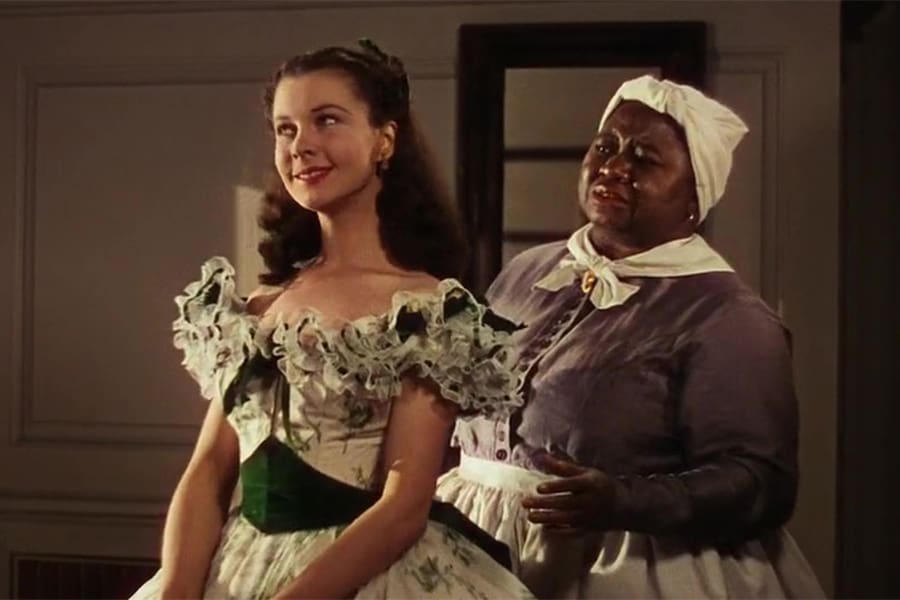
On Monday, September 12th, 2022, my Talking About Freedom class met up in High Point University's Extraordinaire Cinema. We all got settled into the seats and eventually started watching Gone with the Wind. The movie started, and we could already tell how the scene was set. There were men dressed in formal suits and women in puffy dresses. Automatically, this leads to the understanding that it's set in the 1800s.

In the 1800s slavery was still active, and a big thing in the South. How the characters spoke pushed the idea that the story was happening in the South. We also saw that there were slaves working in the opening scene. We then came to further understand that it was set before slavery was abolished in the first official scene. A black woman, who goes by the name Mammy, came into the frame. We could tell that she was dressed in servant clothes. Meaning, there was a high chance that she was enslaved. Even without audio clues to what events were happening, visually we could already gain a vague understanding of the setting.

Throughout the film, I noticed that white people were the primary focus. There weren't many times where the camera focused on the black cast, compared to how the white cast was focused on. The lead-most roles were also white people, so we already understood whose perspective the film was from.

As the film went on, the mistreatment of black people at the time wasn't stark compared to how it has been mentioned historically. The most we saw was the lead character, Scarlett, slapping Prissy when she didn't do something she was supposed to do. But even this was watered down by how Scarlett had slapped Ashley early in the film.

The way the black people were behaving seemed unfitting too. Since they were enslaved, you would have thought they would have taken their work more seriously and not have spoken back to their enslavers. This didn't seem to be the case. They seemed more comfortable talking to their enslavers than would be historically accurate. It didn't seem to fit that Prissy acted one way the whole time we knew her, and then got slapped for acting the same as she always had. This is one part of the film I didn't like; it made the black people seem like they weren't hurting or in a bad position. As if they were okay with how things were and weren't getting mistreated.

In fact, the terms "slave" or "slavery" wasn't even mentioned as much as one may think it would be. Especially considering how it was set in the mid 1800s, around the time of the civil war.

Some highlights of the film that I liked was the lighting. I was interested in how they used shadows to play out a scene. I also like how they used lighting with color. Specifically, when they were capturing the fire reflected off the characters' faces.

Overall, I believe that Gone with the Wind is an eye-catching movie that may even be considered ahead of its time in terms of directing, lighting, and camera angles.


Sources:

Gone with the Wind (1939)

Round Table Discussion (Final)

 Round Table Discussion Image Found Here On December 12th, 2022, we had a round table discussion as our final exam. We had many different di...